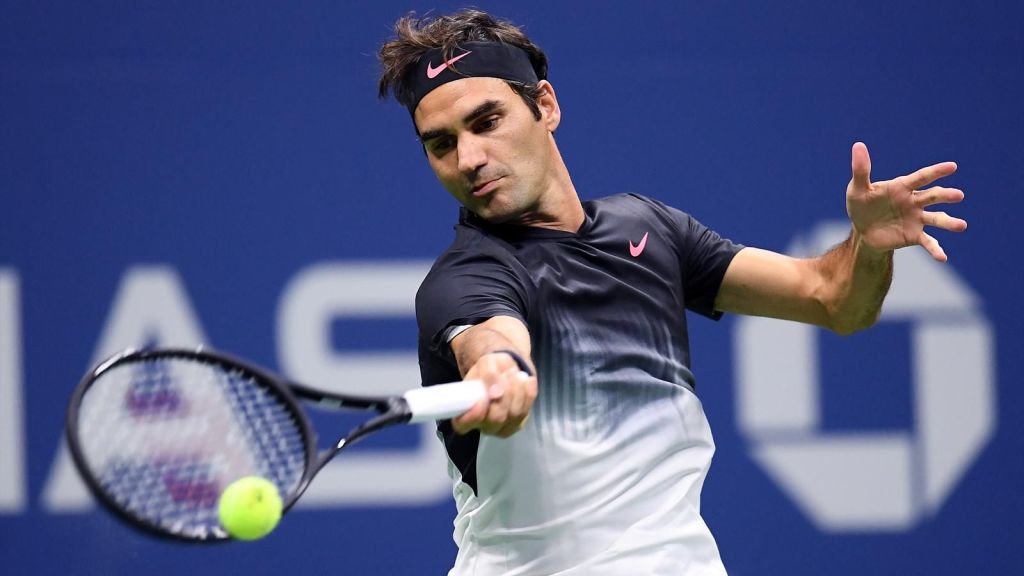
He is one of the oldest current players in the game but why is Roger Federer one of sports elites when it comes to social media and interacting with his fans? Let’s find out…
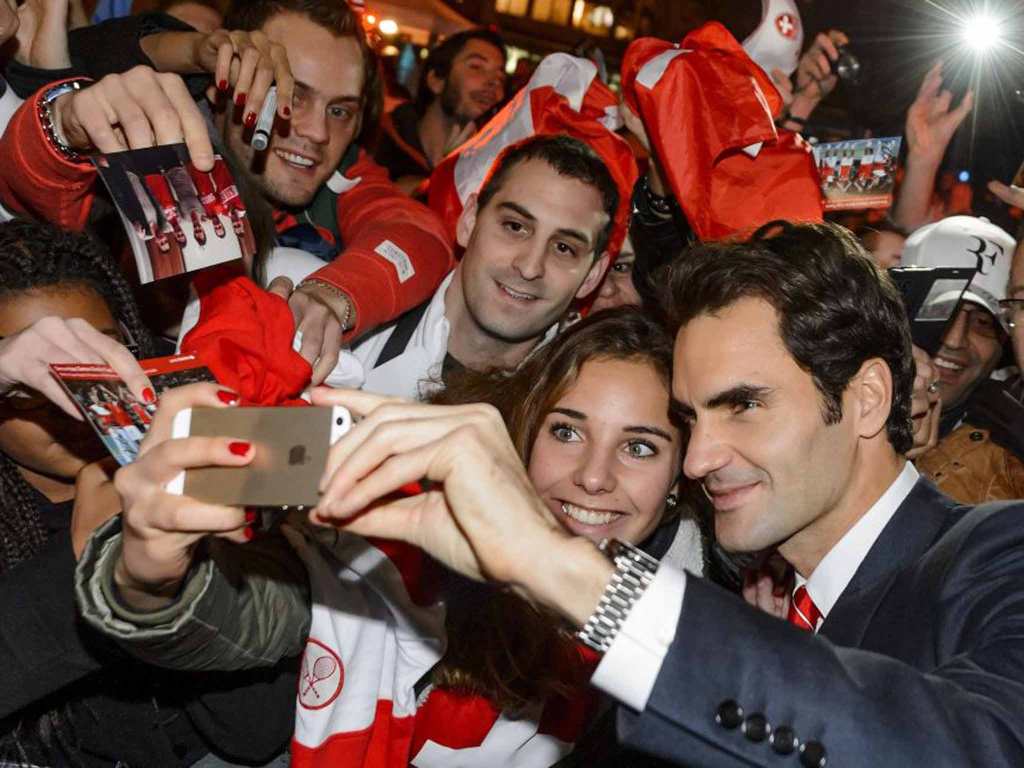
Federer has a technique when playing tournaments in certain places, of praising that city or country. Dickenson (2019) reports that Federer stated “I’ve seen a lot of nice, cool, fun, iconic places but this definitely ranks up there as one of the special ones.” when talking about Miami. Many people believe that it is simply to gain a few fans in that area however it gives his fans in these places a sense of interaction as he praises the place where they live even if it is on the opposite side of the world to where he is from. This helps fans to gain a sense of pride about their home town as their hero sports star has acknowledgment of it and has stated their fondness.
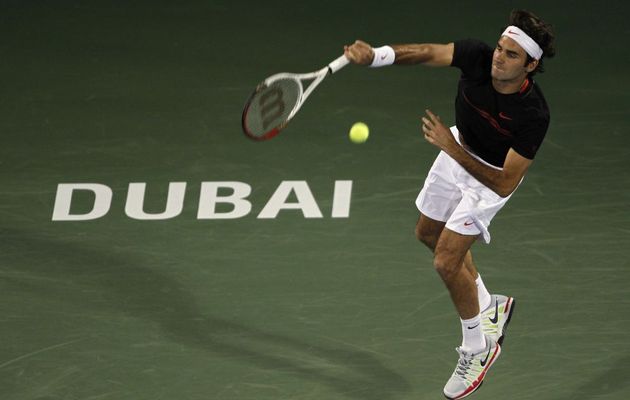
Dubai is reported by Emirates 24/7 (2019) as one of the most developed countries in the world, with sustainable growth in many fields, including the economy, trade, investment and communications, in addition to information, technology, tourism. Building a connection with this country through its tournaments is a way in which Federer has increased his fan base through engagement as well as his business potential as he globalises his brand. McLoughlin (2019) says that every year he talks to Roger about playing Dubai and he is very happy when he does include Dubai in his schedule. He expands on this point stating that Dubai fans have really taken him to their hearts and cheer him on through the tournament, and they are always happy to welcome back our seven-time champion. Churchill (2008) demonstrates that as a consequence of its globalisation, tennis has become a commercialised sport featuring players as marketing commodities, huge broadcast rights and sponsors competing for exclusive rights to events. This is what Federer has done by building a connection with the tennis associations and fans of Dubai. It has helped to commercialise him as a brand and globalise him, increasing his overall business potential whilst gaining worldwide fans.
77% of snapchat users are between 18-24 years old according to Statista (2018) however, Federer is 38 years of age, meaning he should be behind on this scene with this 21st century app. This is certainly not the case as the Swiss uploaded four snaps from the opening of the new stadium in Miami, which is also home to NFL franchise Miami Dolphins. Cyclopaedic News (2019) report that Roger posted a face-on snap to his Instagram Story, accompanied by the location Miami and the words “Welcome to Miami’ and a ‘press’ day emoji. This gives fans behind the scene information about the athlete’s life, giving them a feel of engagement with the individual. This feeling is usually unable to be felt with fans of other athletes as the athlete is usually much more distant from their fans. Lee (2016) states social media provides marketers with an expensive set of tools that enable them to reach consumers directly and this is what Federer has done by creating his own brand due to his popularity. FR is his brand and he has created his own website in order to promote this brand of clothing, giving links to his social media accounts and information about his numerous sponsors. This is all in am attempt to enhance his personal brand, increasing business potential and allowing fans to interact.
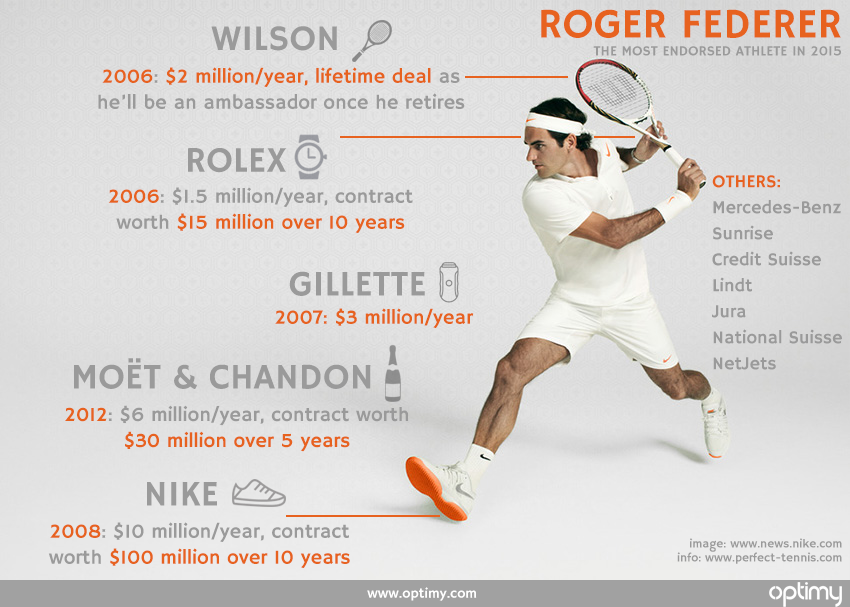
Biography.com Editors (2014) explains how Federer’s professional career begun in 1998, a time before new media had intervened in sport. As new media and technologies have developed into tennis, Federer has also had to adapt and develop in order to use these technologies and media in order to commercially progress. Nicholson et al (2015) demonstrates how the relationship between sport and media has become the defining commercial and cultural connection for both industries at the beginning of the 21st century and Federer has adapted to this 21st century technology in order to gain a huge fan base and therefore go on to get numerous commercial deals. The popularity with fans due to interaction is clear as Kuchal (2018) explains he has won the ATP fans favourite award since 2003 to 2017 and states nobody has come close to winning this award in 15 years.
This solidifies the claim that nobody in tennis has a more global presence and a bigger aura than Roger Federer. Wang and Zhou (2015) explain how social media has been increasingly used by sports organizations and individuals to communicate with the public. Federer is a prime example of someone who utilises social media in order to reap the benefits from a business point of view and a fan engagement side. Are you a Federer Fan? After all, who isn’t.
Reference List
(2nd edn.) Oxon: Routledge.
Analysis of NBA Clubs’ Twitter Use.
Brouwers, J., Sotiriadou, P. and De Bosscher, V. (2015) Sport-specific policies and factors that influence international success: The case of tennis.
Dickenson (2019) ‘Welcome to
Miami’ Roger Federer sends message to fans ahead of Miami Open [Online]
Available at: https://www.express.co.uk/sport/tennis/1103285/Roger-Federer-Miami-Open-message-fans
[Accessed: 10th April, 2019]
International Journal of Sport Communication, 8, pp.133-14
Kuchel (2018) Success makes me
popular, not image. [Online]
Available at: https://www.essentiallysports.com/roger-federer-tennis-us/
[Accessed: 10th April, 2019]
Lee, J.E (2016) Journal of business
research. YouTube vloggers’ influence on consumer luxury brand perceptions and
intentions [Online] V.69 (12) P 5753-5760.
Available at: https://www-sciencedirect-com.liverpool.idm.oclc.org/science/article/pii/S0148296316304222
[Accessed: 26th March 2019]
McLaughlin (2019)
Dubai fans have taken Roger Federer to
their hearts [Online]
Available at: https://www.tennisworldusa.org/tennis/news/Roger_Federer/67139/dubai-fans-have-taken-roger-federer-to-their-hearts-dubai-dutyfree-ceo/
[Accessed: 10th April, 2019]
Nicholson, M., Kerr, A. and Sherwood, M. (2015)
Roger Federer Biography (2018) [Online]
Available at: https://www.biography.com/people/roger-federer-13612203
[Accessed: 10th April, 2019)
Sport and the Media: Managing the Nexus.
Sport Management Review,15, pp. 343-358
Wang, Y. and Zhou, S. (2015) How Do Sports Organizations Use Social Media to Build Accent 2;\lsd
 Sporting World Insight
Leave a comment